Hire Refrigeration & HVAC Mechanics
from South Africa
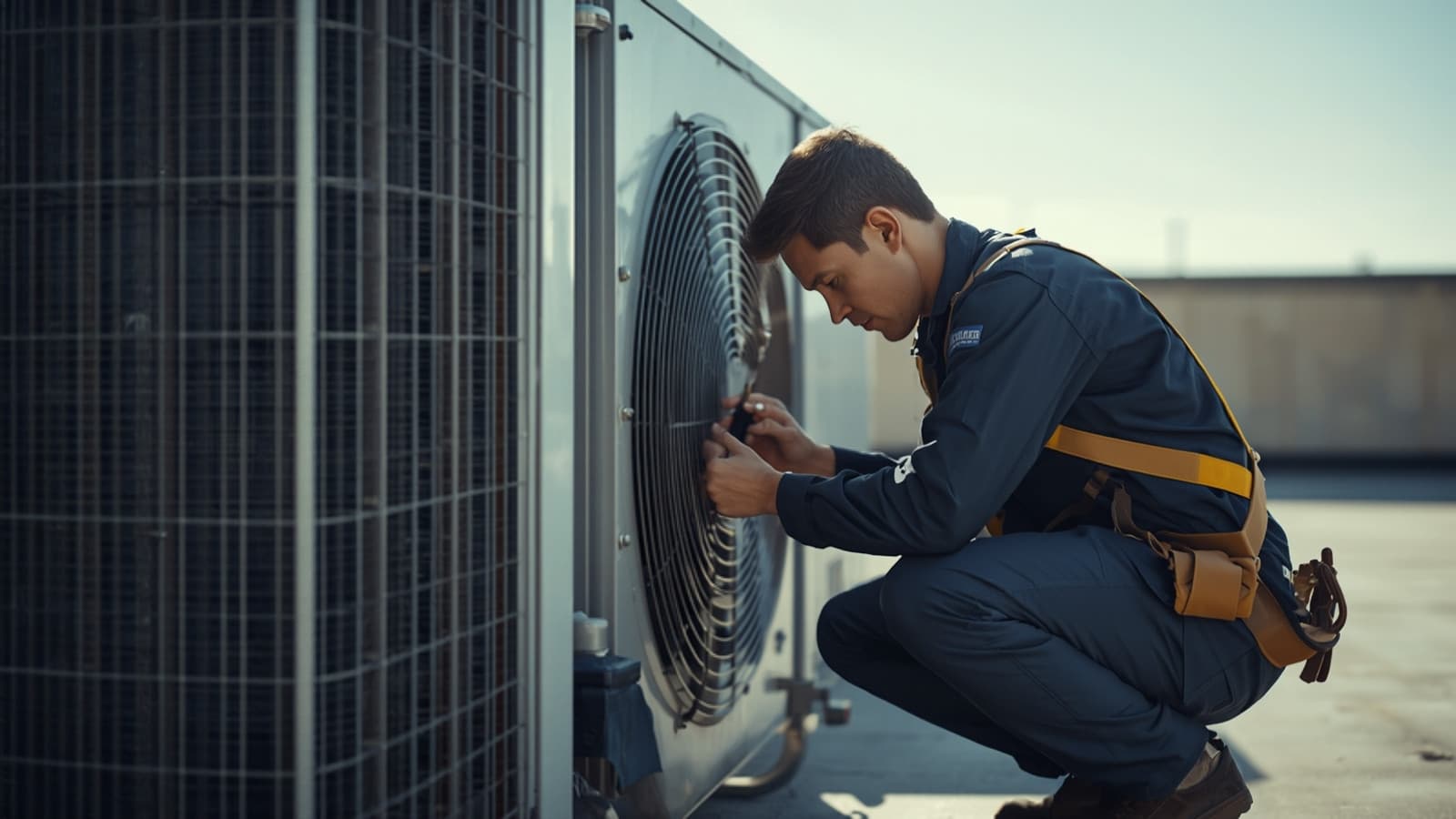
Cold-chain, data centre, and commercial cooling employers across Australia can't find refrigeration mechanics locally. RecruitUp Global sources qualified, trade-tested South African HVAC&R mechanics via the 482 Skills in Demand visa.
A note on visa guidance: RecruitUp Global is a recruitment agency, not a migration agent. All content on this site is for general educational purposes only. For immigration advice or to lodge a visa application, consult a MARA-registered migration agent. RecruitUp specialises in finding and placing qualified South African tradespeople with Australian employers who are ready to sponsor — we handle the recruitment side, not the visa lodgement.
Cold Chain and Cooling Demand Is Outpacing Australia's HVAC&R Workforce
Refrigeration and air-conditioning mechanics have sat in national shortage for years running. Food and grocery cold-chain expansion, a fast-growing data centre build-out, and warmer average temperatures pushing residential and commercial cooling demand have combined into a gap the domestic apprentice system hasn't closed.
Per the Occupation Shortage Report, December quarter 2025, only 54.5% of advertised Skill Level 3 trade vacancies were filled nationally (Jobs and Skills Australia, Occupation Shortage Report, December quarter 2025) — and refrigerated logistics operators report call-out delays as installers and service technicians are stretched across too many sites.
Australia's data centre construction pipeline alone is adding sustained demand for precision-cooling technicians, a specialisation the existing HVAC&R workforce is too thin to absorb without new supply.
Waiting for the domestic pipeline to catch up isn't really an option here — the 482 Skills in Demand visa instead opens a direct line to South Africa's commercial and industrial refrigeration workforce, already trained to a standard Australian assessors recognise.
Commercial refrigeration & cold chain
CriticalSupermarket, food-service, and logistics cold rooms nationwide
Data centres
HighPrecision cooling demand tied to the data centre build-out
Residential & commercial HVAC
HighNew-build installs and service work in high-growth corridors
Industrial process cooling
SignificantManufacturing and mining plant refrigeration systems
Refrigerant transition & servicing
HighLow-GWP refrigerant retrofits adding to routine service demand
Why South African HVAC&R Mechanics Work in Australia
South Africa's commercial and industrial refrigeration sector produces mechanics examined against a trade structure that Australian assessors are already comfortable with — a big part of why this candidate pool sponsors through cleanly.
A Trade Test That Bundles Commercial, AC, and Industrial in One Ticket
South Africa's N2/N3 refrigeration trade test covers commercial refrigeration, air-conditioning, and industrial cooling in a single qualification, rather than splitting light-commercial AC from heavier refrigeration work the way some source countries do.
Split-System and Ducted Install Experience, Not Just Servicing
South Africa's fast-growing residential and light-commercial AC market has candidates installing split and ducted systems as often as servicing existing ones, rather than skewing toward repair-only experience.
Reefer and Transport Refrigeration Exposure
South Africa's fresh-produce export industry runs heavily on reefer trucks and shipping containers, so a meaningful share of candidates bring transport refrigeration experience on top of fixed commercial systems — useful wherever cold-chain logistics is part of the role.
Industrial Ammonia and CO2 System Exposure
Mining and food-processing sites across South Africa still run large ammonia and CO2 refrigeration plant, giving some candidates industrial system exposure well beyond split-system and light-commercial servicing.
Refrigerant Handling Discipline That Transfers Cleanly
South Africa has followed the same global shift away from high-GWP refrigerants as Australia, so candidates are already familiar with the low-emission gases and recovery discipline expected on Australian sites, even before an ARCtick licence is issued.
Comfortable With Both Heat and Humidity Extremes
South Africa's climate spans arid interior heat and humid coastal conditions, giving candidates practical experience with the same system-stress scenarios found across Australia's climate zones.
Comfortable With Retail and Supermarket Cold-Room Compliance
South African retail and food-service chains run the same kind of HACCP-style cold-chain compliance regime supermarkets expect in Australia, so candidates arrive familiar with the documentation and temperature-logging discipline, not just the mechanical side.
Brazing and Pipework Fabrication as a Hands-On Skill
South African refrigeration training puts heavy emphasis on hands-on brazing and copper pipework fabrication rather than pre-fabricated line sets, giving candidates fabrication depth useful on custom commercial installs.
Leak Detection Practices Aligned With AS/NZS 5149
South African commercial refrigeration work includes leak detection and refrigerant recovery practices closely aligned with the safety intent of Australia's AS/NZS 5149 series, ahead of the ARCtick paperwork being finalised locally.
Compressor and Condenser Overhaul, Not Just Component Swaps
Older commercial refrigeration plant across South Africa keeps compressor and condenser overhaul work routine rather than defaulting to whole-unit replacement, giving candidates a depth of mechanical diagnosis beyond swapping pre-built components.
VRF and Chiller Plant Commissioning Experience
Commercial building booms in South Africa have given many candidates hands-on commissioning experience with VRF systems and chiller plant, not just packaged split units — directly relevant to Australia's commercial building-services sector.
Cold-Room Panel Construction and Vapour-Barrier Detailing
South African cold-store construction uses insulated panel systems and vapour-barrier detailing similar to Australian cold-room builds, so candidates already understand the building-envelope side of the trade, not only the mechanical plant.
Superheat and Subcooling Calculations as Standard Practice
Commissioning and fault-finding in South African refrigeration training relies on superheat and subcooling calculations rather than gauge-reading alone — a diagnostic habit Australian commercial refrigeration employers specifically look for.
Cascade and Glycol Secondary-Loop System Exposure
Larger South African cold-storage facilities run cascade refrigeration and glycol secondary-loop systems, giving some candidates exposure to plant configurations beyond the single-circuit setups common in smaller Australian installs.
Controls Wiring and Building Management System Integration
South African commercial installs increasingly tie into building management systems (BMS), giving candidates controls-wiring and BMS-integration exposure beyond stand-alone mechanical servicing.
Nitrogen Purge and Pressure Testing Discipline
Nitrogen purge and pressure testing before gas charging is standard practice on South African commercial installs — a procedural discipline Australian employers specifically check for during handover.
Cold-Room Door and Gasket Servicing
Cold-room door hardware and gasket servicing is routine maintenance work on South African retail and logistics sites, a building-fabric skill that sits alongside the mechanical side of the trade.
Evaporator Coil Cleaning and Fin-Combing Work
Regular evaporator and condenser coil cleaning, including fin-combing to restore airflow, is standard preventive maintenance on South African commercial sites, extending equipment life rather than waiting for a breakdown call.
Multi-Chiller Sequencing and Staging Controls
Configuring sequencing and staging controls across multiple chillers on larger South African commercial sites gives candidates plant-level controls exposure beyond servicing a single stand-alone unit.
Variable Frequency Drive Control for Compressor Motors
Setting up and troubleshooting variable frequency drives on compressor motors is increasingly common on South African commercial installs, an electrical-controls skill layered on top of the core mechanical trade.
Defrost Timer and Heater Element Replacement
Walk-in freezer defrost timer and heater-element replacement is routine service work on South African cold-storage sites, a specific fault category distinct from core compressor and refrigerant work.
Electronic Expansion Valve Programming
Programming and calibrating electronic expansion valves on newer commercial systems is a controls-adjacent skill South African mechanics increasingly build alongside traditional mechanical valve servicing.
Long-Line Refrigerant Set Installation
Installing and charging long-line refrigerant sets for relocated or split condensing units is a specific job-type South African commercial installers handle regularly, beyond a standard short-run split system fit.
Reach-In Display Cabinet Servicing for Retail
Servicing retail reach-in display cabinets, including door heater and lighting circuits, is routine work for South African commercial mechanics, distinct from walk-in cold room and industrial plant servicing.
Freezer Floor Heater Cable Servicing
Testing and replacing floor heater cables that stop a freezer room slab from frost-heaving is a specialised service item South African cold-storage technicians handle, distinct from the core refrigeration circuit.
Refrigerant Recovery and Reclaim Documentation
Documenting refrigerant recovery and reclaim volumes to environmental reporting standards is administrative discipline South African commercial technicians already practise, easing the transition into Australia's own reporting obligations.
South African HVAC&R Qualifications & TRA Assessment
HVAC&R apprentices in South Africa sit a trade test spanning commercial refrigeration, air-conditioning, and industrial cooling plant under the QCTO framework, examined on gas charging, pressure testing, and controls wiring before earning the Section 12 Certificate of Competency.
A separate formal skills assessment from TRA is still required for the 482 pathway — the result turns on the exact qualification units held and how well-documented the accompanying work history is.
The ARCtick refrigerant-handling licence sits entirely outside the TRA assessment and the visa itself — RecruitUp flags the application timeline early so it's budgeted into onboarding rather than surfacing as a delay once the mechanic has already landed.
SA HVAC&R Qualification Route
N2/N3 Coursework ➜ Refrigeration & AC Trade Test ➜ Section 12 Certificate ➜ TRA Formal Assessment ➜ 482 Nomination Lodged
482 Visa Eligibility — HVAC&R Mechanics
Home Affairs reviews every case on its own facts, and the ARCtick licence sits on a completely separate track from the visa itself — confirm both with your migration agent up front.
Budgeting the Hiring Timeline for a Refrigeration Mechanic
Refrigeration mechanic placements sit in the same 4 to 8 month window as other 482-sponsored trades — sponsorship status and the ARCtick licensing step are what typically move it.
| Stage | Who Does It | 75th Percentile | 90th Percentile |
|---|---|---|---|
| RecruitUp sources candidates | RecruitUp | 2–4 weeks | 4–8 weeks |
| Sponsorship approval obtained | Employer + agent | 1–3 months | 4–5 months |
| Role nomination filed | Employer + agent | 1–3 months | 2–4 months |
| Visa grant received | Agent + Home Affairs | 1–3 months | 3–5 months |
| TRA assessment (runs alongside) | Candidate & agent | 3–5 months | 5–7 months |
Sponsorship approval and nomination can run concurrently with candidate sourcing. Processing times are published by the Department of Home Affairs and updated regularly.
How RecruitUp Sources & Places South African HVAC&R Mechanics
RecruitUp handles the trade-side search and vetting; your migration agent runs the visa and the ARCtick process. Here's how the two connect.
Walk RecruitUp Through the System Mix
Split, ducted, commercial cold room, or industrial plant, plus whatever ARCtick coverage the role demands — that gets ANZSCO 342111 signed off before a single candidate is contacted.
Match Against Genuine System History
Every profile RecruitUp puts forward has been checked against real commercial or industrial system exposure, not just classroom units — certificates, references, and English proficiency confirmed ahead of your shortlist landing.
Choose From a Short, Vetted List
Expect a handful of genuinely comparable mechanics, not a long list to sift through — weigh up their system background, pick who to interview, and tell RecruitUp your decision.
Agent Runs Sponsorship, Nomination, and ARCtick in Parallel
Sponsorship approval, the 342111 nomination, TRA assessment, and the ARCtick licence application all move through your migration agent from this point, ideally overlapping rather than queueing one after another.
RecruitUp Stays on the Line Through the Move
The relocation itself is where RecruitUp's own experience matters most — staying in contact so the mechanic is properly set up for day one, not improvising through the first week.
How Much Does It Cost to Sponsor a Refrigeration Mechanic?
Government Fees
- Sponsorship application fee: ~$420
- Nomination application: ~$330
- SAF levy (SME): $1,200/yr upfront
- Visa application charge: ~$4,015
Agent & Compliance Fees
- Migration agent: typically $3k–$8k
- RecruitUp recruitment fee
- TRA HVAC&R assessment: ~$600–$800
- ARCtick licence application fee
Settling-In Costs
- Travel & resettlement support (optional)
- Interim housing while settling in (optional)
- Site onboarding walkthrough
- Tools & gauge-set allowance
Hiring Overseas Refrigeration Mechanics — FAQ
What's the process for sponsoring a refrigeration mechanic from overseas?
Are South African HVAC&R qualifications recognised for the 482 visa?
Do sponsored HVAC&R mechanics still need an Australian refrigerant handling licence?
What's a realistic hiring timeline for an overseas refrigeration mechanic?
What HVAC&R experience do South African candidates typically have?
Can RecruitUp source mechanics for data centre or industrial cooling roles specifically?
What if the mechanic resigns within the first year?
Can RecruitUp source refrigeration mechanics for regional towns, not just capital cities?
Do candidates have experience with supermarket or retail cold-chain compliance, not just the mechanical side?
Can RecruitUp source mechanics with brazing or custom pipework fabrication experience specifically?
Do South African refrigeration mechanics work on vehicle or transport refrigeration units?
Are South African refrigeration mechanics familiar with Australian refrigerant handling and ARCtick licensing?
What commissioning and controller experience do candidates have on commercial HVAC and cold chain plant?
Plan Your Hire
Tools and guides to scope the cost, timing and location of your hire.
Vacancy Bill Calculator
Estimate what an unfilled trade role is costing your business each month.
Open →482 Visa Costs for Employers
A line-by-line breakdown of government, agent and settling-in costs.
Open →Hiring South African Tradespeople
What employers should know before recruiting tradespeople from South Africa.
Open →Related Resources
Hire Electricians from South Africa
Another high-demand trade — ANZSCO 341111 sponsorship guide.
Read more →Hire Riggers & Scaffolders from South Africa
High-risk work licensing and structural trades sponsorship guide.
Read more →Hire Overseas Tradespeople in Western Australia
Where WA's resources boom is squeezing every trade.
Read more →482 Visa Costs: Full Employer Breakdown
What a sponsorship actually costs, fee by fee, for employers.
Read more →How to Hire Overseas Trades in Australia Without the Headache
The complete overview of RecruitUp's end-to-end hiring process.
Read more →