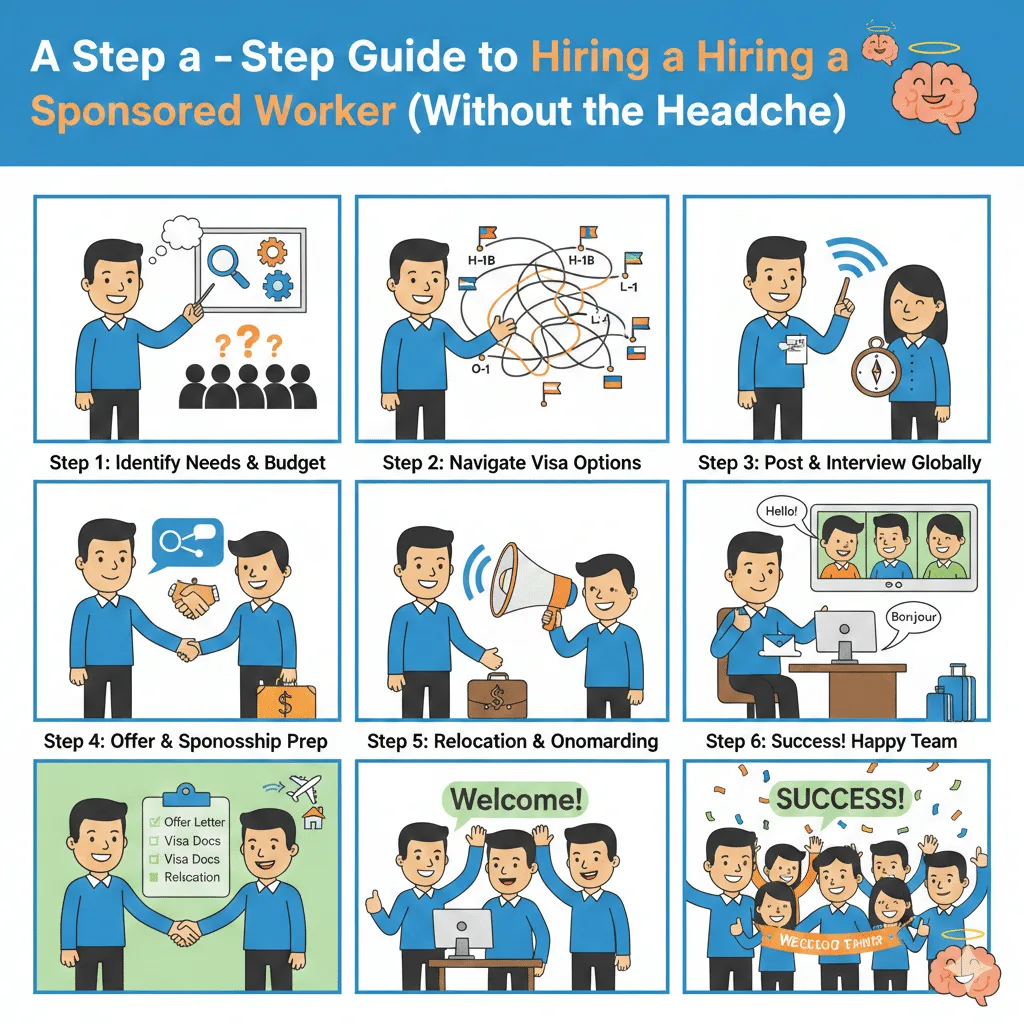
A Step-by-Step Guide to Hiring a Sponsored Worker (Without the Headache)
For many Australian employers, the idea of hiring a sponsored worker sounds complicated, risky, or overwhelming.
Words like visas, compliance, and immigration can trigger hesitation — especially for businesses that have never sponsored before. As a result, many employers delay the decision, continue absorbing vacancy costs, or rely heavily on labour hire, even when they know it’s not ideal.
The reality is this:
Hiring a sponsored worker is far more structured, predictable, and supported than most employers realise.
When done correctly — with the right recruitment partner and registered migration agents — sponsorship becomes a clear, step-by-step process that delivers long-term workforce stability.
This guide walks through the entire sponsorship journey, from first conversation to day one on site, in plain English — without the jargon or stress.
Why Employers Hesitate (And Why That’s Understandable)
Before diving into the process, it’s important to acknowledge why sponsorship feels intimidating.
Common employer concerns include:
-
“We’ve never sponsored before”
-
“The paperwork sounds heavy”
-
“What if we do something wrong?”
-
“What if the visa is refused?”
-
“We don’t have time to manage this”
These concerns are valid — but they’re also based on outdated or incomplete information.
Modern sponsorship is not about navigating the system alone. It’s about partnering with specialists who manage the complexity while you focus on running your business.
Step 1: Clarifying Your Workforce Need
The sponsorship process doesn’t start with paperwork — it starts with clarity.
At this stage, employers define:
-
The role that needs to be filled
-
Required skills and experience
-
Location and work environment
-
Expected start timeframe
-
Long-term workforce plans
This step is critical. The clearer the brief, the smoother the entire process becomes.
Specialist recruiters work with employers to ensure the role:
-
Aligns with sponsorship requirements
-
Meets market salary expectations
-
Is realistic in scope and timeline
This prevents delays later.
Step 2: Candidate Sourcing and Screening
Once the role is scoped, sourcing begins.
Unlike traditional recruitment, international hiring focuses heavily on quality over volume.
Candidates are typically screened for:
-
Minimum 3+ years hands-on experience
-
Trade or occupation relevance
-
English proficiency
-
Verifiable references
-
Diagnostic and maintenance skills
-
Cultural and location fit
-
Genuine relocation intent
This stage removes much of the risk employers worry about.
By the time candidates are presented, employers aren’t just reviewing CVs — they’re meeting people who have already been assessed for skill, mindset, and long-term suitability.
Step 3: Employer Interviews and Selection
Interviewing international candidates is surprisingly straightforward.
Most interviews are conducted online and often include:
-
Initial culture-fit conversation
-
Technical interview or scenario-based questions
-
Discussion around relocation expectations
-
Family and settlement considerations
Employers remain in full control of who they hire.
You decide:
There is no obligation to proceed unless you’re confident.
Step 4: Making an Offer and Setting Expectations
Once a preferred candidate is selected, a formal job offer is issued.
At this stage, expectations are clearly set around:
-
Role responsibilities
-
Salary and conditions
-
Location and working hours
-
Visa pathway and timelines
-
Relocation responsibilities
Clear communication here prevents misunderstandings later and ensures alignment between employer and candidate.
Step 5: Labour Market Testing (LMT)
Labour Market Testing is a standard requirement for most sponsored roles.
In simple terms, LMT demonstrates that:
This step is handled with guidance and support.
Recruitment partners and migration agents:
-
Advise where and how to advertise
-
Ensure ads meet compliance requirements
-
Track timeframes and documentation
For employers, this is a guided process, not a burden.
Step 6: Sponsorship and Nomination (If Required)
If the business is not already an approved sponsor, the next step is applying for Standard Business Sponsorship (SBS).
This involves demonstrating that your business:
Once SBS is approved, the nomination is lodged for the specific role.
Registered migration agents manage these applications, ensuring:
-
Accuracy
-
Compliance
-
Timely submission
Employers are provided with checklists and support — not left guessing.
Step 7: Visa Application and Processing
Once sponsorship and nomination are lodged, the candidate’s visa application is submitted.
This stage typically includes:
While processing times vary, employers are kept informed throughout.
This phase often runs in parallel with planning for onboarding and arrival, so time is used efficiently.
Step 8: Planning for Arrival and Onboarding
While the visa is processing, employers can prepare for the candidate’s arrival.
This may include:
-
Confirming start dates
-
Organising tools, PPE, and inductions
-
Assisting with short-term accommodation (optional)
-
Preparing the team
Many employers find that supporting the first few weeks of settlement leads to:
-
Faster integration
-
Higher engagement
-
Stronger retention
Even small gestures make a big difference.
Step 9: Day One on Site
When the sponsored worker arrives and starts work, the hardest part is already done.
From here:
-
The employee works under Australian workplace laws
-
The employer provides normal supervision and support
-
The worker contributes immediately while continuing to settle
Most employers report that once the employee starts, the sponsorship process quickly fades into the background — and the focus returns to productivity and team integration.
What Employers Are (And Aren’t) Responsible For
One of the biggest misconceptions about sponsorship is employer responsibility.
Employers are typically responsible for:
Employers are NOT:
-
Personally managing visa paperwork
-
Giving migration advice
-
Responsible for the candidate’s personal visa costs
-
Expected to “figure it out” alone
With the right partners, responsibilities are clear and manageable.
What Happens If Something Goes Wrong?
This is a common fear — and a fair one.
Reputable recruitment partners reduce risk by:
Many also offer:
This safety net gives employers confidence to proceed.
How Long Does the Whole Process Take?
Timelines vary, but most employers can expect:
In total, many employers see 6–9 months from CV to start.
This is why early planning is critical.
Employers who plan ahead avoid emergency hiring and vacancy losses.
Why Employers Who Sponsor Once Often Do It Again
Interestingly, many employers who sponsor for the first time become repeat sponsors.
Why?
-
The process is clearer than expected
-
Results are stronger than local hiring alone
-
Retention improves
-
Workforce stability increases
Sponsorship shifts from “unknown risk” to “trusted solution.”
The Biggest Mistake Employers Make
The most common mistake isn’t sponsorship itself — it’s waiting too long to start.
Employers who delay often:
-
Absorb unnecessary vacancy costs
-
Increase burnout and turnover
-
Miss out on strong candidates
Starting the conversation early gives you options. Waiting until you’re desperate limits them.
Final Thoughts
Hiring a sponsored worker doesn’t have to be complicated, stressful, or risky.
With the right structure and support, it becomes a clear, step-by-step process that delivers long-term value to your business.
In a labor market where skills are scarce and demand is high, sponsorship isn’t a last resort — it’s a smart workforce strategy.
Check our Process
Socials:
Facebook
LinkedIn