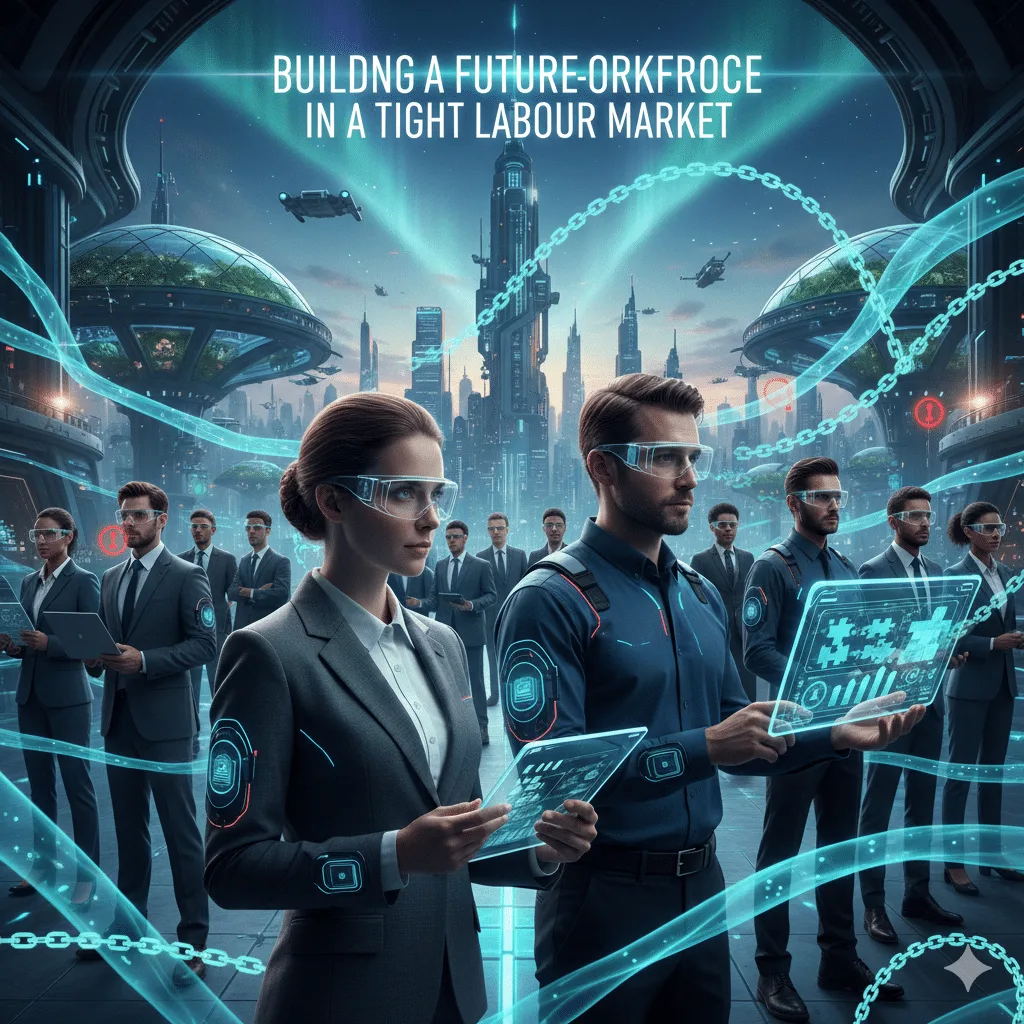
For Australian employers, the labour market of today looks very different from the one they built their businesses in.
Skilled labour shortages are no longer short-term disruptions. They are structural, ongoing, and reshaping how businesses operate, grow, and compete.
The question for employers in 2025 isn’t:
“When will things go back to normal?”
It’s:
“How do we build a workforce that can withstand this new reality?”
A future-proof workforce isn’t about reacting faster — it’s about planning smarter. It’s about creating stability, resilience, and capacity in a labour market that no longer guarantees supply.
This article explores what a future-proof workforce looks like, why traditional hiring models are falling short, and how employers are adapting to stay ahead.
The New Workforce Reality
Across Australia, employers are facing:
-
Persistent skills shortages
-
Increased competition for talent
-
Rising wage pressure
-
Higher turnover
-
Greater reliance on overtime and labour hire
At the same time, demand for services, infrastructure, and production continues to grow.
This mismatch between demand and workforce capacity is not temporary — it’s the new operating environment.
Businesses that fail to adapt risk stagnation or decline. Those that evolve can gain a powerful competitive edge.
Why Traditional Hiring Models Are No Longer Enough
For decades, workforce planning followed a familiar pattern:
In today’s market, this model breaks down.
Employers now face:
Relying solely on local hiring channels is no longer sufficient to sustain growth.
Future-proofing requires diversification of talent sources and a longer-term view.
What Does “Future-Proof” Actually Mean?
A future-proof workforce is not about having more people than you need.
It’s about having:
-
Capacity to meet demand
-
Stability to reduce disruption
-
Flexibility to adapt
-
Retention to protect knowledge
-
Predictability for planning
Future-proofing is proactive, not reactive.
Many businesses hire only when a role becomes impossible to ignore.
Future-focused employers hire based on capacity forecasting, asking:
-
What work is coming in the next 6–12 months?
-
Where are our skills gaps?
-
What roles would unlock growth?
-
Which positions create the biggest bottlenecks?
This shift allows employers to act early — before pressure builds.
The Role of International Talent in Workforce Resilience
International hiring is not about replacing local workers — it’s about strengthening the workforce as a whole.
When used strategically, international talent:
-
Fills critical skill gaps
-
Stabilises teams
-
Reduces reliance on overtime
-
Supports regional and rural operations
-
Improves retention
Because international hires often relocate for long-term stability, they contribute to workforce continuity, not churn.
Building Workforce Redundancy Without Overstaffing
Resilient businesses don’t operate at 100% capacity all the time.
They build redundancy — not inefficiency.
This means:
-
Having enough staff to absorb demand spikes
-
Allowing leave without stress
-
Avoiding burnout cycles
-
Maintaining safety and quality
Strategic hiring provides breathing room — not excess.
Retention as a Core Business Strategy
Future-proofing isn’t just about hiring — it’s about keeping good people.
Employers who invest in:
-
Sustainable workloads
-
Clear expectations
-
Supportive onboarding
-
Long-term planning
See:
-
Lower turnover
-
Higher engagement
-
Stronger culture
Retention is a competitive advantage in a tight labour market.
Reducing Risk Through Diversification
Relying on a single talent source increases vulnerability.
Future-focused employers diversify by:
-
Hiring locally where possible
-
Using apprenticeships and training pipelines
-
Incorporating international recruitment
-
Planning workforce needs across timeframes
This diversification spreads risk and increases stability.
Why Reactive Hiring Costs More Long-Term
Emergency hiring decisions often lead to:
-
Higher costs
-
Poorer fit
-
Increased turnover
-
Short-term thinking
Future-proofing replaces urgency with intention.
It allows businesses to:
The financial benefits compound over time.
Leadership Mindset: From Survival to Strategy
Building a future-proof workforce requires a shift in leadership mindset.
Instead of asking:
Leaders ask:
This mindset change unlocks:
-
Better planning
-
Reduced stress
-
Stronger decision-making
Workforce stability supports leadership effectiveness.
The Businesses That Will Win in the Next Decade
In the coming years, the most successful businesses will be those that:
-
Secure talent early
-
Plan beyond immediate vacancies
-
Invest in people, not just roles
-
Build systems that support growth
Talent availability will increasingly define competitive advantage.
Why Specialist Workforce Partners Matter
Future-proofing doesn’t mean doing everything alone.
Specialist recruitment partners help employers:
-
Understand labour market trends
-
Build long-term hiring strategies
-
Access international talent responsibly
-
Manage compliance and complexity
The right partnership turns recruitment into a strategic function — not a reactive task.
Putting It All Together
A future-proof workforce is:
-
Planned, not rushed
-
Stable, not stretched
-
Diverse, not dependent
-
Resilient, not fragile
It’s built deliberately — over time — through smart decisions and trusted partnerships.
Final Thoughts
Labour shortages are shaping the future of Australian business.
Employers who adapt — by thinking long-term, diversifying talent sources, and planning ahead — will not only survive, but thrive.
Future-proofing your workforce isn’t about predicting the future perfectly.
It’s about being prepared for whatever it brings.
Socials:
Facebook
LinkedIn