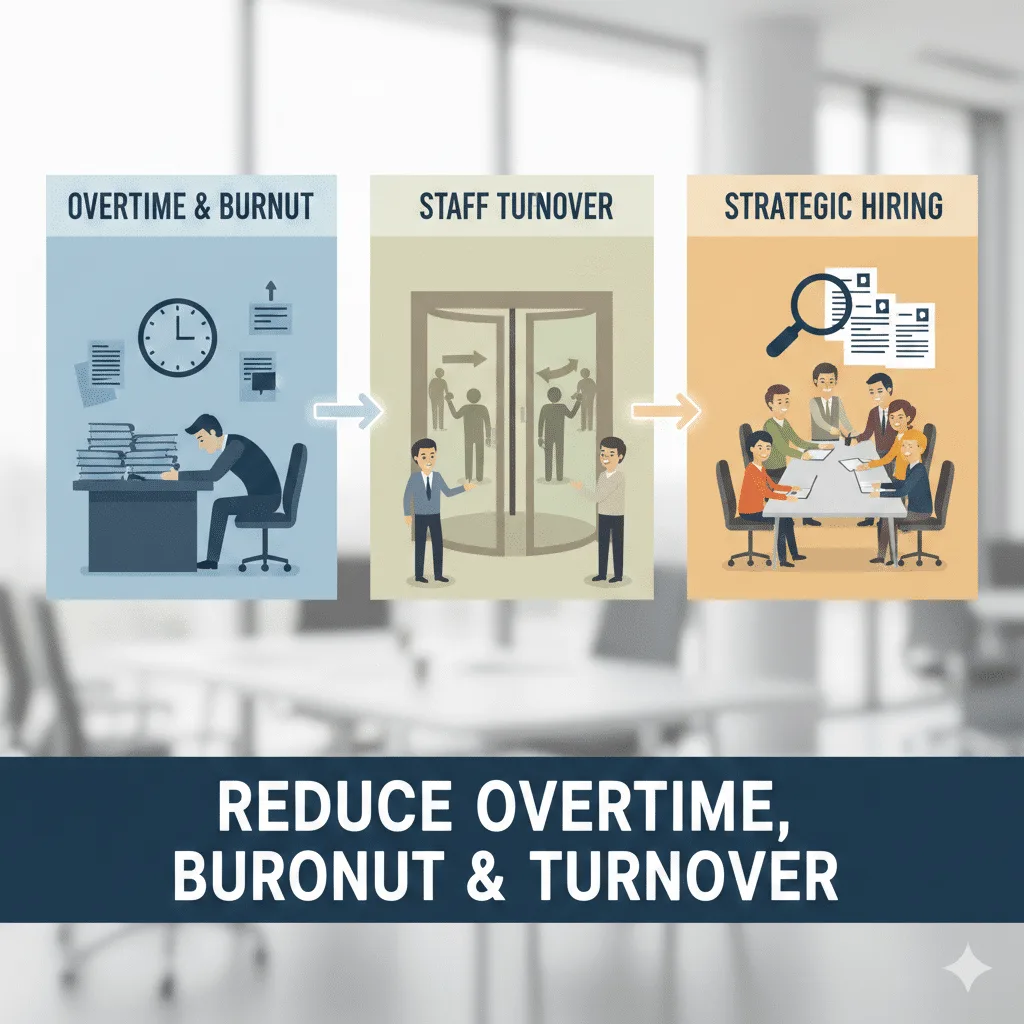
How to Reduce Overtime, Burnout, and Staff Turnover With Strategic Hiring
Overtime was never meant to be a long-term solution.
Yet for many Australian employers, it has quietly become part of the business model. When roles remain unfilled, teams step up. Extra hours are approved. Productivity is maintained — at least on the surface.
But underneath, something far more serious is happening.
Chronic overtime leads to fatigue. Fatigue leads to burnout. Burnout leads to turnover. And turnover creates even more vacancies — restarting the cycle.
In a tight labour market, this cycle is becoming one of the biggest threats to business stability.
The good news?
This problem isn’t solved by pushing harder — it’s solved by hiring smarter.
This article explores how strategic hiring, including international recruitment, helps employers reduce overtime, protect their teams, and stabilise their workforce for the long term.
When Overtime Stops Being a Short-Term Fix
Occasional overtime can be healthy and manageable.
Chronic overtime is not.
When overtime becomes routine rather than exceptional, it signals:
Many employers don’t notice the shift because it happens gradually. Extra hours are approved to “get through a busy period” — but the busy period never ends.
The Real Cost of Overtime (Beyond the Pay Rate)
Overtime costs more than just wages.
Yes, penalty rates add up — but the real damage happens elsewhere.
Chronic overtime leads to:
In safety-critical industries, fatigue-related incidents can have severe consequences for both people and the business.
Burnout: The Silent Workforce Killer
Burnout rarely arrives suddenly.
It builds quietly through:
Employees experiencing burnout often:
By the time they leave, employers have already lost productivity — and now face the cost of replacement.
Turnover Creates a Compounding Problem
When experienced staff leave due to burnout:
This creates a compounding effect where each resignation increases the likelihood of the next.
Many employers mistakenly treat turnover as an individual issue — when it’s actually a systems issue.
Why “Trying Harder” Doesn’t Fix the Problem
Managers often respond to staffing pressure by:
-
Covering shifts themselves
-
Asking teams to “push through”
-
Delaying recruitment decisions
While well-intentioned, this approach sends an unintended message:
“The business will always cope — no matter the cost.”
Over time, this erodes trust and increases disengagement.
Strategic Hiring: A Different Way Forward
Strategic hiring focuses on capacity, not crisis.
Instead of asking:
It asks:
This shift changes everything.
How One Additional Hire Can Stabilise an Entire Team
Employers often underestimate the impact of one well-placed hire.
Adding a skilled worker can:
-
Reduce overtime across the team
-
Improve morale immediately
-
Increase productivity per person
-
Lower safety risks
-
Create breathing room for managers
The return on this hire is often far greater than the cost — especially when compared to ongoing overtime and turnover losses.
Why International Hiring Plays a Key Role
In a tight local labour market, strategic hiring often means looking beyond traditional channels.
International hiring allows employers to:
-
Fill roles that remain vacant locally
-
Add stable, long-term capacity
-
Reduce reliance on overtime
-
Break the burnout cycle
Because international hires are typically relocating for long-term stability, they bring:
-
Commitment
-
Reliability
-
Lower turnover risk
This makes them particularly effective in restoring balance to overstretched teams.
Reducing Turnover by Fixing the System, Not the Symptom
Retention improves when employees feel:
Strategic hiring signals to your team that:
This alone can dramatically reduce turnover.
The Leadership Benefit: Less Firefighting, More Control
Chronic understaffing forces leaders into constant firefighting.
When staffing stabilises:
Leadership effectiveness improves not because leaders work harder — but because the system supports them.
The Financial Reality: Prevention Is Cheaper Than Replacement
Replacing an experienced employee can cost:
-
Recruitment fees
-
Training time
-
Lost productivity
-
Cultural disruption
Preventing burnout through strategic hiring is almost always cheaper than recovering from turnover.
Read More
How Employers Are Making the Shift
Forward-thinking employers are:
-
Auditing overtime trends
-
Identifying burnout risks early
-
Planning workforce needs 6–12 months ahead
-
Using international hiring strategically
-
Viewing staffing as a system, not a series of emergencies
These businesses are not immune to labour shortages — but they are far better equipped to manage them.
What Strategic Hiring Actually Looks Like in Practice
Strategic hiring isn’t about overstaffing.
It’s about:
-
Having enough capacity to absorb demand spikes
-
Protecting your best people
-
Maintaining safety and quality
-
Building resilience into the business
This is especially critical in industries where fatigue and mistakes carry serious consequences.
The Long-Term Payoff: A Healthier Business
When overtime drops and burnout eases:
Staffing stability isn’t just good for people — it’s good for profit.
Final Thoughts
Overtime and burnout are not signs of dedication — they are signs of system strain.
In a tight labour market, the most successful employers aren’t the ones pushing their teams hardest — they’re the ones building capacity before it breaks.
Strategic hiring isn’t a luxury. It’s a leadership decision that protects your people and your business.
Socials:
Facebook
LinkedIn